

Board Performance · 2025
In this section14 topics
- Compliance Monitoring — Overview1 item
- Prevention of Conflicts of Interest3 items
- Prevention of the Use of Inside Information3 items
- Anti-Corruption4 items
- Whistleblowing4 items
- Selection of Directors & Chief Executives6 items
- Selection of Independent Directors2 items
- Director Development1 item
- Evaluation of Board & Subcommittee Performance3 items
- Subcommittees1 item
- Meeting Attendance & Remuneration4 items
- Supervision of Subsidiaries & Associated Companies4 items
- Board Duty Performance — Overview1 item
- Audit Committee Duty Performance1 item
Compliance Monitoring — Overview
Compliance Monitoring — Introduction
The Company gives priority to good corporate governance and has determined relevant policies and principles in its governance policies and business ethics, and also promotes genuine compliance to inspire confidence in all groups of stakeholders. In 2025, the Company delivered E-learning training to employees and executives across all group companies, focusing on Business Ethics & Code of Conduct. The training content covered, among the prevention of conflicts of interest, anti corruption practices, the prevention of insider information misuse, and other related matters. Each course comprises lessons followed by a quiz. If a learner selects an incorrect answer, the system identifies the error and provides explanations with illustrative examples referencing the relevant content, and allows unlimited retakes until all questions are answered correctly. This approach ensures personnel understand the requirements accurately and continue to comply with them.
Over the last year, the Company monitored each department to ensure compliance with corporate governance covering every matter as follows:
Prevention of Conflicts of Interest
Has the Company Acted to Prevent Conflicts of Interest?
Yes
Operations in the Past Year
The Board of Directors has stipulated the measures to take care of and monitor transactions which may present conflicts of interest as well as connected transactions by prudently and independently determining the appropriateness of transactions under the framework of good corporate governance which has been constantly practiced for the benefits of the Company as if transactions have been conducted with third parties. The Board has also provided summary reports for each quarter and will publish the summary on the last day of the year in the Annual Report and the Annual Registration Statement. Also, if there is any agenda item at a meeting of the Board, any agenda item in which directors or executives are stakeholders, they must comply with the policy on corporate government by abstaining from voting, or expressing any opinion on that agenda item.
Furthermore the Company has requested the Directors and the Executives to report to the Company on gains and losses of their own or those who are related, particularly on the gains and losses which are related to the management of the business of the Company and its subsidiaries in order to provide the Company with information for business operations in accordance with the regulations on connected transactions, which may raise conflicts of interest and may lead to transfers of benefits of the Company and its subsidiaries in compliance with Section 89/14 of the Securities and Exchange Act B.E. 2551 as amended by the Securities and Exchange Act (No.4) B.E. 2551 and the Notification of the Capital Market Supervisory Board No. TorChor. 2/2552 Re: Report on Interest of Directors, Executives and Related Persons which stipulates that a director and an executive shall file with the Company a report on his interest or a related person’s interest in relation to management of the Company,The Company Secretary is stipulated to submit a stakeholders’ report, according to Article 89/14, to the Chairman of the Board and the Chairman of the Audit Committee within 7 days from the date the Company has received the said report.
The Company has established policies and guidelines regarding the prevention of conflicts of interest as part of its business ethics. These have been communicated to the Board of Directors, executives and all employees, with strict adherence emphasized annually through various channels. Examples include including it as an agenda item in Board of Directors meetings, informing employees via email, and conducting e-Testing for executives and employees.
The Company requires that all business operations prioritize the interests of the Company and its stakeholders. Every department must conduct its activities with transparency and accountability. It is the duty of the Board of Directors, executives, employees at all levels, and all related parties to avoid any conflicts of interest or actions that may give rise to such conflicts. In cases where avoidance is not possible, the relevant departments must ensure that all operations are carried out transparently, honestly, and in the best interests of the Company.
In this regard, the Company has established measures and practical guidelines for performing duties or conducting any activities that may lead to conflicts of interest, as follows:
The Company has a clear code of ethics to not allow the Board of Directors or executives to take a position in another company which is not a company in the Group and is in the same type of business, which might cause a conflict of interest.
The Company made a tender offer to purchase shares from Mitsubishi Corporation as part of its share acquisition process. During this process, the interested director, Mr. Hiroyasu Sato, did not attend the meeting and did not receive any documents that might give rise to a conflict of interest, to ensure that the consideration was conducted in a transparent and fair manner for all shareholders.
The Board assigns the Company Secretary to oversee and follow up items with potential conflict of interests and connected transactions. The Company Secretary is responsible for preparing a quarterly summary report of those items and transactions and regularly publicizes such reports at year-end in the Company’s annual report and the data transaction form. Furthermore, the Board and management members, in any Board meeting, are required to comply with good corporate governance policy by not participating in casting votes or giving opinions on any issues sensitive to conflict of interests or vested interests, and in 2025 there was no transaction which may be a conflict of interest.
The Audit Committee has assigned the internal auditor to audit large transactions the Company has with suppliers, which are transactions connected with the Board of Directors, executives or Company employees which may be a conflict of interest.
The Company has approved the plan for business segmentations and specified that its subsidiary, i-Tail Corporation PLC (“ITC”), be the flagship company in the pet food production and distribution business and pet care business, and that its other subsidiary, Thai Union Feed Mill PLC. (“TFM”), be the flagship company in the marine animals’ feeds industry business. In order to clarify the business structure and prevent conflict of interest, the Company announces the policies, as follows;
on 23 February 2022, the Board of Directors decided that as long as the Company remained the majority shareholder of ITC, its policy for ITC is to specify ITC as the flagship company in the production and distribution of pet food and pet-related products. Thus, the Company shall not invest nor conduct business that would be competing in the said business segment, either directly or indirectly.
The Company and ITC also made the agreements to not compete in each company’s business segment with the details as follows;
1.1 The Company and other companies in Thai Union Group (not including ITC and the companies in the ITC group) agree to not compete or invest directly or indirectly in the pet food business, pet care business or other related businesses, including investments in start-up companies under the SPACE-F program that is considered to be in competition with ITC and companies within the ITC group. Also, the Company shall not enter into partnerships or be major shareholders of other companies that are similar to or in competition with ITC or companies within the ITC group, excluding only the investments made through ITC or companies in the ITC group.
1.2 ITC and companies within the ITC group agree to not compete or invest directly or indirectly in the human food business or other related businesses that would compete with Thai Union PCL or other companies in the Thai Union Group. Also, ITC and companies within the ITC group shall not enter into partnerships or be major shareholders of other companies that are similar to or in competition with the Thai Union PCL or other companies in Thai Union Group, excluding only the investments made through Thai Union PCL or other companies in Thai Union Group.
1.3 Each party of this agreement will set up measures to ensure that each party, as well as other companies in their respective groups, fulfills its obligations to not invest nor conduct business as specified in (1) and (2) of this agreement.
1.4 This agreement will stop being effective if any of the following instances take place;
(a) If changes in the shareholder structures occur and have resulted in the Thai Union PCL no longer being the majority shareholder of ITC. The definition of “majority shareholder” here is the same as the definition as specified in The Office of the Securities and Exchange Commission’s announcement, or
(b) ITC ceases being a listed company on the Stock Exchange of Thailand.
2. on 20 February 2019, the Board decided that as long as the Company remained the majority shareholder in TFM, the Company shall not invest nor conduct business that would be in competition with the TFM’s marine animals’ feed industry business, either directly or indirectly, except in the following cases;
2.1 The Company’s investment in the marine animals’ feed industry business in Avanti Feed Ltd. (“AVANTI”), which the Company and subsidiaries have had prior to the announcement of this policy
2.2 The increase in the proportion of shares in AVANTI that stems from the right offering to original shareholders according to shares proportion. Nevertheless, the Company shall do its utmost to decrease the said increase in shares proportion to not exceed 25.1% of the paid registered capitals of AVANTI. The increase in the proportion of AVANTI shares is also allowed if it is done to preserve the rights of the Company as a shareholder of AVANTI or other companies in the AVANTI group.
2.3 Other cases which the Company and TFM may agree on at a later date in compliance with the related laws and regulations, including those under the 1993 Stock and Stock Exchange Act (amended) and related regulations as specified by the Capital Market Supervisory Board or the Securities and Exchange Commission, the Office of the Securities and Exchange Commission and the Stock Exchange of Thailand.
In 2025, the Company did not identify any misconduct or receive any complaints related to conflicts of interest.
Number of Conflict-of-Interest Cases
| Metric | Current Year | Previous Year | Two Years Ago |
|---|---|---|---|
| Total number of cases or issues related to conflicts of interest (cases) | 0 | 0 | 0 |
Prevention of the Use of Inside Information
Has the Company Acted to Prevent the Use of Inside Information?
Yes
Operations in the Past Year
The Company has determined measures to prevent the use of internal information by directors and executives for personal benefit. Every individual has been informed that the Board of Directors has determined measures to oversee and monitor transactions which may be a conflict of interest and connected transactions, which are considered carefully as to their appropriateness in a free and open manner, within the framework of good corporate governance practice, consistently for the Company’s benefit, as if it was a transaction with an external party. A summary report is prepared quarterly and disseminated at the end of the year in the Annual Report and the annual data transaction report on a consistent basis. Furthermore, the Company has stipulated that the Board and management members must report to the Company their vested interests in the Company’s and its subsidiaries’ operations and management, or those of their connected persons. This requirement is aimed to furnish necessary information to the Company and to enable the Company to comply with its own connected transaction handling procedures, which are established to prevent such items with potential conflict of interests from leading to possible siphoning of corporate funds and interests from the Company and its subsidiaries.
There are mandatory duties to report any changes made to the securities ownership of their own, those of their spouses and children below lawful age who intend to trade the Company’s securities must notify the Company Secretary or the person assigned by the Board of Directors at least one (1) day in advance as well as must report to the Securities and Exchange Commission (SEC) and the Stock Exchange of Thailand (SET) pursuant to Section 59 of the Securities and Exchange Act B.E. 2535, the Notification of the Office of the SEC No. Sor Jor. 6/2567 Re: Preparation of Report on Changes to the Securities and Derivatives Holding of Director, Executive, Auditor, Plan Preparer and Plan Administrator including relevant law and regulations. The Board or management members or sections with access to, or knowledge of, internal information are not allowed to leak the information to outsiders or other unauthorized persons. In addition, no securities trading by those management is allowed within the period of one month prior to the disclosure of financial statements or any other material information to the public and other periods to be determined by the Company from time to time in order to prevent illegal use of internal information undisclosed to the public, which can affect the trading of the Company’s share on the Stock Exchange of Thailand. Rules and regulations concerning the exchange of stock by the Directors, Executives and employees including other persons as specified by the Company are formulated in order to ensure confidence that the Directors, executives and employees follow the 1993 Stock and Stock Exchange Act and other announcements that concerning the stock exchange. In 2025, the Company recorded no incidents or complaints concerning the use of insider information in violation of applicable laws, regulations of relevant authorities, or the Company’s Corporate Governance Policy. The Company also found no instances of directors or executives trading the Company’s shares during prescribed blackout periods.
Furthermore, every year the Board of Directors prepares a form assessing the adequacy and suitability of the Company’s internal control systems under the following main headings.
Control Environment
Risk assessment
Control of operations
IT systems and communicating data
Monitoring systems
As well as this assessment, the Audit Committee is also the body providing adequate and appropriate oversight to the Company’s internal control systems. It also monitors the operations of the Company and its subsidiaries to look after and protect the Group’s assets. The Audit Committee will have independence in its operations and therefore, the audit department makes an audit of different departments in the Company and its subsidiaries over the year to compile and present to the Executive Committee and the Board of Directors for review.
In 2025, the Board of Directors and executives participated in in-house training on “Class Actions and Corporate Governance” conducted by Herbert Smith Freehills (Thailand) Co., Ltd. The curriculum covered corporate governance and key issues relating to insider information management and securities trading, including (among others) the duties and responsibilities of directors and executives, unfair trading practices, prevention of conflicts of interest, and the Company’s anti-bribery and anti-corruption policy.
Report on Interest of Directors and Executives
In compliance with Section 89/14 of the Securities and Exchange Act B.E. 2551 as amended by the Securities and Exchange Act (No.4) B.E. 2551 and the Notification of the Capital Market Supervisory Board No. TorChor. 2/2552 Re: Report on Interest of Directors, Executives and Related Persons, the Company requires every Director and Executive to report to the Company his or her interest and those of related persons. Also, the Company Secretary is required to give a copy of the report on interest to the Chairman of the Board of Directors and the Chairman of Audit Committee within seven business days from the date of receiving the report. The Board of Directors is responsible for setting principles and procedures for such reports.
Criminal Record of the Company and its Directors and Executives
In the past five years, the Company has no case of violation against rules, regulations and laws e.g. regulations of the Securities and Exchange Act, Public Limited Companies Act B.E.2535 or any other laws such as the submission of financial statements within a given timeframe, provision of financial assistance to related companies or other companies that are not subsidiaries. There have been no cases of violation of labor laws or employment laws. In addition, the Directors and Executives, currently holding positions in the Company and its subsidiaries, did not violate any rules, regulations and laws e.g. the Public Limited Companies Act B.E.2535, the Securities and Exchange Act, or the Derivatives Act of B.E.2546.
However, in 2022, the Securities and Exchange Commission (SEC) accused Tin Shu Chan of not following the article 242 (1), which had stipulated punishments as described in Article 296 and 296/2 of the Thai Securities and Exchange Act related to the incident incurred in 2017. Tin Shu Chan has fully cooperated and complied with the orders of SEC and therefore, Tin Shu Chan meets all the qualifications required by law to hold a director position.
Number of Inside-Information Cases
| Metric | Current Year | Previous Year | Two Years Ago |
|---|---|---|---|
| Total number of cases or issues related to the use of inside information to seek benefits (cases) | 0 | 0 | 0 |
Anti-Corruption
Has the Company Acted on Anti-Corruption?
Yes
Operations in the Past Year
The Company has announced and enforced an official anti-corruption policy which has been reviewed and approved by the Board of Directors. In 2025, the Board of Directors conducted a review of the key provisions of the Anti-Bribery and Corruption Policy, which addresses various control mechanisms against any acts of bribery or corruption, for instance, political contributions, charitable contributions and sponsorships, facilitation payments, gifts and hospitality, conflicts of interest, and hiring of government officials. Our Anti-Bribery and Corruption Policy is in line with the Company’s corporate governance framework, best international practices, and widely recognized anti-bribery and corruption guidelines. The Policy is annually communicated to all directors, executives, and employees for awareness, signed acknowledgement, and further implementation. The Chief Executive Officer has communicated, emphasized and reinforced the policy to directors, executives and all employees. Additionally, executives continuously underscores its importance to demonstrate a strong "Tone at the Top." Furthermore, all employees, including executives, sign an acknowledgment and commit to adhering to the policy annually.
The Company has been certified by the Thai Private Sector Collective Action Against Corruption (CAC) since 2018. On 31 March 2024, the Company received its second renewal certification which has been continuously certified, and joined the certificate acceptance ceremony, named “CAC Certification Ceremony 2024: Business Beyond CAC: Spotlight on Supply Chain – Transparent Business Chains for Sustainable Thai Businesses,” held on 17 July 2024. This certification demonstrates that the Company has a comprehensive anti-bribery and corruption policy, guidelines and governance measures for preventing corruption and strictly complies with the policy, guidelines and measures as mentioned.
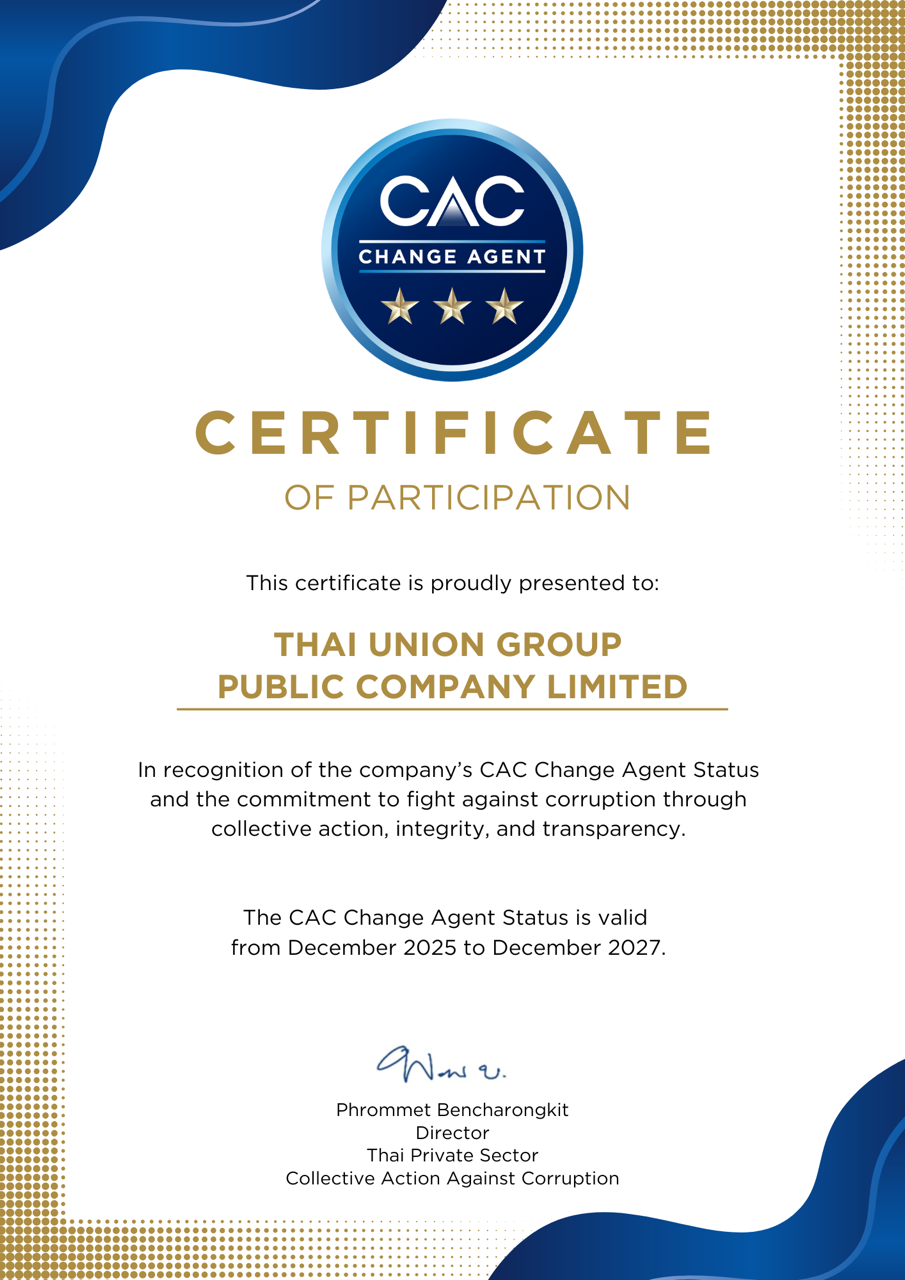
The Company has been recognized as a CAC Change Agent by the Collective Action Against Corruption (CAC), reflecting its strong commitment to conducting business with integrity and transparency. Beyond internal compliance with anti-corruption policies, the Company actively encourages its business partners and stakeholders across the value chain to participate in CAC-related initiatives, with the objective of strengthening ethical business practices and fostering sustainable growth.
The Company encourages directors, executives, and employees to regularly engage with external organizations. For example, it participated in the “Anti-Corruption Day 2025” event held online via Facebook Live on the Anti-Corruption Organization of Thailand (ACT) page on September 6, 2025, under the theme “No cheating, no success… is that true?” In addition, the Company organized the #ThaiUnionAgainstCorruption #TUActDay2025 campaign, where executives and employees joined activities and took group photos on the 35th floor of SM Tower to demonstrate the Company’s collective stand against bribery and corruption. The Company also fosters ongoing engagement through a Photo Challenge, inviting employees to post on the Company’s ViVa Engage channel to help build a lasting culture of transparency across the organization.
The details of Anti-Bribery and Corruption policy are as follows.
The Company shall not tolerate any form of bribery or corruption. This covers all businesses and transactions in every country and relevant department. At the same time, the Company has prepared guidelines and strict procedures to fight bribery and corruption.
Additionally, the Company has established and communicated guidelines on giving or receiving gifts, hospitality, sponsorships, or other benefits to all executives and employees. Directors, executives, employees, and/or their families are strictly prohibited from soliciting gifts, entertainment, or any other benefits from business partners or stakeholders under any circumstances. This measure aims to uphold high standards of transparency and fairness in operations, aligning with the company’s anti-bribery and anti-corruption policy.
The Audit Committee reviews related practices and procedures annually to ensure alignment with evolving laws and business contexts, and to uphold ethical and fair business operations. Accordingly, all directors, executives, and employees are required to strictly comply with this policy. The Company mandates annual anti-bribery and anti-corruption training through its corporate information system, and personnel must acknowledge and regularly confirm their adherence. In parallel, the Company communicates the policy to external stakeholders and all business partners to prevent corruption risks. In 2025, the Company conducted “Global Fraud Awareness Training” to further strengthen an organizational culture of anti-corruption. Beyond these communications, employees can access the relevant policies via the Ocean Connect Thai Union system, while external stakeholders—such as business partners—can access them on the Company’s website at this link: https://investor.thaiunion.com/misc/cg/20230509-anti-corruption-policy-en.pdf. Non-compliance will be subject to disciplinary action in accordance with Company regulations and may result in legal action as appropriate
The Company sets up a communication channel for our employees worldwide in the form of Whistleblower Platform, which is created and maintained by an independent external agency. The Company will listen to all complaints equally, transparently, and provide fairness to all parties. The Company has a policy for confidential information protection and anonymity of whistleblowers.
Role and responsibilities
The Board of Directors is responsible for inspecting and supervising to ensure that business conduct is transparent, accountable, and strictly in accordance with policy, guidelines and procedures related to Anti- Bribery and Corruption in overall.
The Audit Committee is responsible for overseeing internal controls both financial and operational of accounting and documenting procedures including all other anti-corruption related procedure, providing channel(s) for complaint or reporting f corrupt activities, and advises on the implementations per Anti-Corruption Policy and Code of Conduct; and Reporting finding(s) to the Board of Directors on a regular basis. Therefore, in order to ensure that all the Company is in compliance with laws related to anti- bribery and corruption therein.
The Compliance Department is responsible for implementing this Policy, as well as establishing the related additional details, along with advice on the application of this Policy.
All Executives are responsible for ensuring that everyone who reports to them is made aware of and understands this Policy through adequate and regular training session, including communication and awareness raising among internal and external stakeholders. Proper management systems and measures must be put in place and periodically reviewed to ensure effective governance and implementation in alignment with the intent and new developments in current business conduct as well as changing of laws, rules and regulations.
The Employees must uphold this Policy when performing their duties. Everyone who knows or suspects a violation of this Policy must report it to a supervisor or through one of the channels as specified by the Company.
In 2025, the Company did not identify any misconduct or receive any complaints related to bribery and corruption, nor any violations of its Anti-Bribery and Anti-Corruption Policy.
Form of Anti-Corruption Operations
| Operation |
|---|
| The participation in anti-corruption projects |
| Communication and training for employees on anti-corruption policy and guidelines |
Number of Corruption Cases
| Metric | Current Year | Previous Year | Two Years Ago |
|---|---|---|---|
| Total number of cases or issues related to corruption (cases) | 0 | 0 | 0 |
Whistleblowing
Has the Company Implemented Whistleblowing Procedures?
Yes
Operations in the Past Year
The Company provided a channel for whistleblowing or complaint-making that stakeholders are or may be affected by the damage caused by the Company’s operation, or the employees are involved in unlawful, dishonest acts or corruption by directly submitting the case to:
Chairman of the Audit Committee or General Manager of Internal Audit
Thai Union Group Public Company Limited
23rd floor, S.M.Tower, Phyathai, Phyathai, Bangkok 10400 Telephone 02 298-0024 ext. 4340
Facsimile 02 298-0024 ext. 4369
Email address: complaint@thaiunion.com
Or on the Company’s website at EthicsPoint - Thai Union Group PLC
Once the Company has received information or complaints from stakeholders, the Company will conduct preliminary investigation to determine the complaint types. Then, the Company will collect information and coordinate with related agencies in gathering evidence, information and consider how to proceed. If the complaints concern fraudulent activities or corruption, the agencies involved will coordinate with the Audit Division to further investigate the matter and report the Audit Committee to acknowledge. There are also many other internal channels for employees’ complaints to suit each person’s convenience. Details of these channels can be seen under the heading, “Employee Complaint Channels”. The whistleblowers or filers of complaints that are employees, customers, individuals hired for work by the Company or other groups of stakeholders who are whistleblowers, will have their rights protected and defended according to the law or the guidelines set by the Company.
In 2025, the Company received 3 complaints via the complaint channel for outside persons and employees regarding business and policy misconducts. The Audit Committee, Internal Audit, Legal Department and Human Resource Department will jointly investigate the matter following the company’s complaint management procedures while 1 complaint is still under review and what the punishments for the persons in question should be. This includes disciplinary actions for any persons responsible for the said misconducts, ranging from verbal warning and written warning to dismissal 2 complaints. Nonetheless, the majority of complaints received pertain to non-compliance with business ethics and regulations. The Company has analyzed these complaints to identify the cause of deficiency in its internal control systems. Based on these findings, the Company has sought to establish or revise guidelines and preventive measures to shield against any violation of the Company’s business ethics, policies and rules, including any potential corruption act. The improved guidelines and measures were designed to be concise, as well as to ensure continuous compliance monitoring and reduce the risk of recurrence
Number of Whistleblowing Cases
| Metric | Current Year | Previous Year | Two Years Ago |
|---|---|---|---|
| Total number of cases or issues received through whistleblowing channels (cases) | 3 | 5 | 3 |
Details of Whistleblowing Cases
| Status | Period Type | Start of Period | End of Period | Details of the Case or Issue | Investigation Results | Corrective Actions | Case or Issue |
|---|---|---|---|---|---|---|---|
| Incident no longer subject to action | month/year Range | 2025-01 | 2025-12 | Non-compliance with business ethics and regulations | Substantiated and appropriate actions have been taken. | Disciplinary actions for any persons responsible for the said misconducts, ranging from verbal warning and written warning to dismissal 2 complaints. | 3190 · Description: Compliance with laws, regulations, and rules |
| Incident reviewed by the organization | month/year Range | 2025-01 | 2025-12 | Non-compliance with business ethics and regulations | 3190 · Description: Compliance with laws, regulations, and rules |
Selection of Directors & Chief Executives
Directors & Chief Executives — Introduction
Principles and methods of nominating and appointing directors
The Company nominates a director with the Nomination, Remuneration and Corporate Governance Committee in accordance with the Board Diversity Policy taking into account the suitability and qualification of the director both current and during the nomination process, with diversity in terms of gender, race, ethnicity, nationality, skin color, country of origin or cultural background, age, education, professional skills, specific expertise and experience to align with Company’s strategy and criminal record factors of independence, business directions and overall factors of the Board of Directors, when comparing the business direction in the present and in the future. A Board Skill Matrix is prepared to determine the criteria of nominating directors annually every year. In this review, the Nomination, Remuneration and Corporate Governance Committee will consider diversity from the pool of names such as recommendations from company directors or nominations of individuals by shareholders and external consultants, or from the database of the Thai Institute of Directors.
Directors may be re-elected after the expiration of their term of office, except when the director position becomes vacant not by rotation during the year. It will be considered to nominate an individual who is appropriately qualified and does not have any legally prohibited qualifications for being a director, and there will be an investigation of personal records and qualifications, and including the databases of directors such as the list of names of directors and executives issuing securities of the SEC. This will be proposed to the shareholders meeting to elect the new director. A substitute director appointed to fill an interim vacancy shall be in the office only for the remainder of the tenure. At every Annual General Meeting of Shareholders, one-third of directors are to retire, for election to replacement for the directors who retire by rotation are elected according to criteria and procedures set forth below.
Each shareholder has a right to vote in proportion to share volume owned; the principle of “one share, one vote” is applied.
Each shareholder is required to cast the entire vote owned in one for one or more candidates but cannot split the vote into portions.
Candidates shall be entitled to a directorship based on votes received. A candidate with maximum votes is first entitled to a directorship and followed by the other candidate with less votes, respectively. As a rule, the number of newly appointed directors must not exceed the number of new directors intended in that election.
Shareholders, if necessary, may pass resolutions to remove any director prior to the statutory expiration of their office term provided three quarters of majority votes of all shareholder’s present at a meeting is recorded; and the aggregate share volume owned by shareholders must be greater than half of the aggregate share volume owned by all shareholders must be greater than half of the aggregate share volume owned by all shareholders present at the meeting. Such cases shall be effective only when the qualifications of all Board members and the management comply fully with Section 68 of the Public Companies Limited Act of 1992 and the SEC’s Regulation Governing the Rules, Conditions and Procedures for the Securities Offer and Permission dated 18 May 1992 including relevant regulations.
Are Directors Selected Through the Nomination Committee?
Yes
Are Chief Executives Selected Through the Nomination Committee?
Yes
Number of Directors from Major Shareholders
4
Rights of Minority Shareholders on Director Appointment
The Board allowed shareholders to propose a list of name potential director candidates and a meeting agenda including the questions for the 2025 Annual General Meeting of Shareholders. The Company Secretary was assigned to publicize such information by using the electronic media through the communication systems of the Stock Exchange of Thailand, forwarded to the Company’s website in order to allocate appropriate time for the shareholders’ proposals. The Company has adhered to the practice of allowing shareholders to propose names of potential director candidates and topics to be included in the agenda for the Annual General Meeting of Shareholders in advance since 2007. This past year, the announcement was disseminated on 22 August 2025, and submissions were accepted from 1 September 2025 – 31 December 2025 (a total of 122 days), and 171 days before the Board was asked to pass a resolution setting the date and nominating the names for the Annual General Meeting of Shareholders’ consideration. None of the shareholders submitted any names of potential director candidates or any topics to add to the meeting agenda, so no item was added to the previously announced meeting’s agenda.
Method of Director Appointment
| Method |
|---|
| Method whereby each director requires approval votes more than half of the votes of attending shareholders with voting rights |
Selection of Independent Directors
Criteria for Selecting Independent Directors
Independent Directors – Under the Company’s Corporate Governance Policy, at least one-third of Board members and not less than three persons, must be independent directors with a 3-year term of office.
Definition of Independent Directors
Independent directors mean directors who are qualified and independent in line with the same qualification criteria described in the Notification Governing Qualifications and Responsibilities of Audit Committee established by the Stock Exchange of Thailand. In addition, a person qualified to serve as an independent director must be able to perform duties to preserve the best interests of all shareholders in an equitable manner without conflicts of interest and be available in Board meetings to give independent and unbiased opinions and judgments.
Qualification of independent directors
Not hold shares of more than 0.05 percent of total voting stocks of TU including stocks held by connected persons of the independent director, as well as nominees.
Not be nor have been a major shareholder.
Not be nor have been a Board member of its parent company or an executive director, employee, staff, advisor who receives the salary of a controlling person of TU, its parent company, its subsidiaries or its associated companies.
Not be a professional advisor.
Not have nor have had a business relationship with the Company, its parent Company, its subsidiaries, its associated companies or a juristic person who may have conflicts of interest, in the manner that may interfere with his independent judgment.
Not be appointed as a representative of the Company’s or its major shareholder’s Board members or a shareholder who is related to the Company’s major shareholders.
Not have any characteristics which make him or her incapable of expressing independent opinions with regard to the Company’s business affairs.
The aforementioned definition of an independent director is based on the Company’s Corporate Governance Policy established by the Board. Moreover, the Company’s criteria are stricter than “the criteria” required by the Stock Exchange of Thailand and the Securities and Exchange Commission in terms of stock holding ratio.
Independent Director nomination and selection process
The Company shall select qualified individuals who are not employees or salaried staff of the Company or its affiliates, are not involved in the day-to-day management, and are independent from major shareholder groups. Such individuals must hold no more than 0.05% of the total voting shares of the Company and be capable of safeguarding the interests of minority shareholders. The proposed candidate will be submitted to the Board of Directors for consideration and approval, and subsequently presented to the shareholders’ meeting for further approval.
Did Any Independent Director Have a Business or Professional Relationship?
No
Director Development
Qualifications for Director Selection
| Qualification | Skill & Expertise |
|---|---|
| Principles and methods of nominating and appointing directors The Company nominates a director with the Nomination, Remuneration and Corporate Governance Committee in accordance with the Board Diversity Policy taking into account thesuitability and qualification of the director both current and during the nomination process, with diversity in terms of gender, race, ethnicity, nationality, skin color, country of origin or cultural background, age, education, professional skills, specific expertise and experience to align with Company’s strategy and criminal record factors of independence, business directions and overall factors of the Board of Directors, when comparing the business direction in the present and in the future. A Board Skill Matrix is prepared to determine the criteria of nominating directors annually every year. In this review, the Nomination, Remuneration and Corporate Governance Committee will consider diversity from the pool of names such as recommendations from company directors or nominations of individuals by shareholders and external consultants, or from the database of the Thai Institute of Directors. | 114 · Description: Food & Beverage · 143 · Description: Accounting · 144 · Description: Finance · 165 · Description: Risk Management · 1683 · Description: Business Administration |
Evaluation of Board & Subcommittee Performance
Criteria for Evaluating Board Performance
The Board has determined the performance evaluation of the Board, and every subcommittee at least once a year since 2013. These include the Board of Directors, the Audit Committee, the Risk Management Committee, the Nomination, Remuneration and Corporate Governance Committee and the Sustainable Development Committee. The evaluation form of the Board of Directors is divided into individual evaluations and of the whole Board as a self-evaluation every year.
Evaluation process
The Company Secretary has sent evaluation forms by email to the directors for annual self-evaluation
Summarized and presented the evaluation results which is divided into 4 levels: 1. Excellent 2. Good 3. Fair and 4. should be improved then reported to the Chairman of the Board and the chairman of each subcommittee to study and analyze the evaluation results together and determine practical methods of development of the director’s work with the objective to help directors consider reviewing their performance, various issues and hindrances over the past year to formulate methods of improvement for the Board to carry out its duties more efficiently.
Evaluation of Board Performance in the Past Year
Board of Directors Performance Assessment
Structure and Qualification of the Directors
Role, Duty and Responsibility of the Directors
The Board of Directors’ Meetings
Performance of the Directors
The Relationship with the Management team
Self-development of the Directors and the development of the Executives
Individual performance assessment of each director
Core competency, Structure and Qualification of the Directors
The Board of Directors’ Meetings
Role, Duty and Responsibility of the Directors
Performance assessment of sub-committees as a whole
Structure and Qualification of the sub-committee
Sub-committee meetings
Role, Duty and Responsibility of the sub-committee
Performance assessment of sub-committees for each individual sub-committee member
Structure and Qualification of the sub-committee
Sub-committee meetings
Role, Duty and Responsibility of the sub-committee
Performance of the member
The Relationship with the Management team
Self-development of the members
The Board of Directors has also determined a performance assessment of the Chief Executive Officer (CEO) which is considered according to targets and success of that achievement under the following headings:
Leadership and Managerial Qualities
Strategic Direction Setting
Strategic monitoring
Planning and Performance
Board Relations
Community Relations
Management and Relationship with employees
Succession Plan
Knowledge and Skills
Personal Qualification
In 2025, The Company secretary has sent the evaluation forms of the Board of Directors to the directors, which summarized and presented the evaluation results to the Board of Directors in order to achieve the above-mentioned objectives. The evaluation of the performance was as follows:
Board Evaluation | Excellent |
Director Evaluation | Excellent |
Committee Evaluation | Excellent |
Individual Committee Evaluation | Excellent |
CEO Evaluation | Excellent |
Evaluation Results
| Evaluated Body | Group — Carried Out? | Group — Grade / Average Score | Group — Grade / Full Score | Individual (Self-Assessment) — Carried Out? | Individual (Self-Assessment) — Grade / Average Score | Individual (Self-Assessment) — Grade / Full Score | Cross (Assessing Other Directors) — Carried Out? |
|---|---|---|---|---|---|---|---|
| Board Of Director | Y | 3.92 | 4.00 | Y | 3.81 | 4.00 | N |
| Other Subcommittee | Y | 3.89 | 4.00 | Y | 3.90 | 4.00 | N |
| Other Subcommittee | Y | 4.00 | 4.00 | Y | 3.90 | 4.00 | N |
| Other Subcommittee | Y | 4.00 | 4.00 | Y | 3.81 | 4.00 | N |
| Audit Committee | Y | 4.00 | 4.00 | Y | 3.88 | 4.00 | N |
Subcommittees
Subcommittees
| Results of the Subcommittee's Duty Performance |
|---|
Dear Shareholders, The Nomination, Remuneration and Corporate Governance Committee (NRCG) has performed its duties assigned by the Board of Directors in accordance with the Committee’s charter and related policies. NRCG is responsible include nominating and selecting qualified individuals in compliance with the Company’s director qualification and nomination policy, Board Skills Matrix and Board Diversity Policy by emphasizing diversity considerations during the nomination process, including an appropriate proportion of independent directors and female directors while ensuring that there are no legal disqualifications. In addition, nominated directors are required to possess appropriate knowledge, expertise and relevant professional experience and to demonstrate transparency, integrity and accountability, in order to effectively contribute to the Company’s business operations in line with good corporate governance principles. The selection process follows the corporate governance principles for listed companies prescribed by the Securities and Exchange Commission (SEC) and The Stock Exchange of Thailand (SET), the guidelines of the Thai Institute of Directors Association (IOD) as well as in line with the regulatory agency's policy, Dow Jones Sustainability Index (DJSI) and international standard of capital market trends and is responsible for determining the compensation of the company's directors and sub-committees, defining their scope of responsibilities and amend policies. Furthermore, the Committee is responsible for determining the remuneration of the Company’s directors and sub-committees, defining their scope of duties, and reviewing and amending policies and governance practices to ensure alignment with the Company’s business operations. The Committee’s recommendations are subsequently submitted to the Board of Directors for consideration and approval. The Nomination Remuneration and Corporate Governance Committee convened three meetings and each time a quorum was met with the following resolutions: Policy and Criteria Formulation on Directors’ Nomination
Compensation Policy Compensation and Remuneration for the Company’s Directors and Executives
Compliance and Corporate Governance Policy Review
The Nomination, Remuneration and Corporate Governance Committee has fully executed its duties as assigned by the Board of Directors with due diligence and transparency for the highest benefit of the company and every shareholder. |
In 2025, Thai Union Group continued to encounter significant challenges, including persistent global economic pressures driven by inflation, geopolitical conflicts, and subdued consumer demand in certain markets. Trade tariff volatility and protectionist measures—particularly impacting Thailand-to-U.S. trade flows—the appreciation of the Thai baht against the U.S. dollar and euro, have adversely affected sales, volumes, and costs. The Risk Management Committee (the Committee) oversaw the effectiveness and efficiency of the Company’s Group-wide risk management framework to mitigate risks, strengthen resilience, and identify opportunities. The Committee consistently monitored and recommended measures for short-term, long-term, and emerging risks. Additionally, the Committee provided oversight and strategic recommendations on risks related to the Company’s global transformation program, ensuring a smooth and successful transition. In 2025, the Committee held four meetings to review risk management practices, adhering to their charter and good corporate governance principles. Key tasks performed include: 1. REVIEWED RISK PROFILE AND MITIGATION The Committee reviewed Group-wide risks and mitigation strategies, focusing on: 1.1 Strategic risks
1.2 Operational risks - Raw material prices and supply availability, conversion costs, major damage at production plants, people health and safety, digital transformation and cybersecurity. 1.3 Legal & Compliance risks – Regulatory compliance and implication of the amendment or future regulation for example, the amendments of the Royal Ordinance on Fisheries 2015, personal data privacy laws, risk from on-going litigations 1.4 Financial risks - Exchange rates, interest rates, taxation, liquidity, funding and capital. 1.5 Investment risks - Risk towards or from new strategic investment and existing loss-making businesses. 2. REINFORCED RISK MANAGEMENT CULTURE AND PROCESS The Committee promoted risk management policies throughout the business and among employees, reinforcing the Group’s risk management culture and processes through various activities:
In summary, the Committee concluded that the Company’s risk management framework and implementation were adequate and appropriate for the business and could facilitate the achievement of the Company’s vision “To Become the World’s Leading Marine Health and Nutrition Company” and its 2030 corporate strategy. FORWARD LOOKING FOR 2026 The Committee foresees the possibility that global challenges from 2025 will continue into 2026, new global emerging risks. Thus, the Committee will continue to address these challenges, focusing on:
2.1 AI technologies 2.2 Global biodiversity loss and ecosystem collapse that could impact the oceans that the Company relies on in the long term |
Dear Shareholders, The Sustainable Development (SD) Committee is a high-level decision-making mechanism for advancing and monitoring Thai Union’s sustainability strategy, in support of our corporate goal “Healthy Living, Healthy Oceans.” Co-chaired by the CEO and Chief Sustainability & Communications Officer, the SD Committee brings together key senior executives and meets two times throughout the year to review the progress towards our sustainability commitments, discuss emerging issues and make strategic decisions to drive Thai Union’s sustainability programs. The decisions of the SD Committee are communicated to relevant business units and functions for implementation in collaboration with our global SD team. The mandates of the SD Committee are as follows:
In 2025, the SD Committee convened two meetings to monitor progress and provide strategic guidance for the continued advancement of Thai Union’s sustainability strategy under SeaChange 2030. Throughout the year, the committee remained focused on ensuring that the Company’s sustainability ambitions, performance, and strategic direction remained aligned with global expectations, industry leadership, and Thai Union’s long-term commitment to “Healthy Living, Healthy Oceans.” The first meeting of the year (SD Committee Meeting 1/2025), held in April, centered on a comprehensive review of the Company’s 2024 sustainability performance and approved sustainability report. The committee received updates on progress toward the SeaChange 2030 commitments, including responsible sourcing (responsible wild caught seafood, responsible aquaculture, responsible agriculture), climate action (path to net zero), sustainable packaging, nutrition & health, best-in-class manufacturing, safe decent and equitable work, corporate citizenship, and ecosystem protection (ecosystem restoration, ocean plastics reduction). Key achievements were presented, highlighting continued improvements in responsible sourcing, carbon reduction initiatives, health & nutrition, sustainable packaging, and ongoing collaborations with partners across the value chain. After reviewing the overall performance and outcomes, the Committee formally acknowledged and took note of the Company’s achievements in 2024, reaffirming confidence in the direction and effectiveness of the sustainability strategy. The second meeting (SD Committee Meeting 2/2025), held in September, focused on strategic refinements to the SeaChange 2030 framework to enhance clarity, measurability, and long-term impact. The Committee reviewed and approved proposed improvements to the performance indicators under the ecosystem restoration and responsible agriculture commitments. The revisions aimed to strengthen the underlying methodology and introduce more precise, actionable KPIs that would enable clearer tracking of progress, better alignment with global standards, and more effective communication of outcomes to stakeholders. In particular, the enhancements emphasized measurable ecosystem restoration efforts, biodiversity considerations, and more robust indicators for responsible feed, land use, and agricultural practices. The Committee expressed strong support for these refinements, underscoring the importance of transparent, impact-driven, and scientifically grounded metrics to guide future decision-making and ensure continued leadership in sustainable seafood and responsible business practices. The SD Committee remains committed to overseeing the implementation of the SeaChange 2030 strategy, strengthening governance, and ensuring that Thai Union continues to progress toward its sustainability goals with ambition, accountability, and integrity. |
Meeting Attendance & Remuneration
Meeting Attendance & Remuneration — Introduction
Meetings of Non-Executive Directors
The Board of Directors supports Non-Executive Directors to hold meetings with no executive directors present for the Non-Executive Directors to discuss matters concerned with management independently as they see fit. In 2025, the Non-Executive Directors’ Meeting was held once on 4 August 2025 with six Non-Executive Directors in attendance, which discussed many important issues related to the management of the Company and suggested training topics for the company to prepare for directors and executives in the next year, including suggestions for management improvement. After the meeting, the result of the meeting was reported to the Chief Executive Officer for further consideration and action.
Meeting Attendance
The Directors of the Company are committed and always prepared to attend meetings, including the Board of Directors’ Meetings, the Sub-Committees’ Meetings, and the Annual General Meeting of Shareholders. Also, the Board of Directors has set the quorum with a minimum of at least two-thirds of the total members of directors in order to make a quorum who shall vote in the meeting. Every director should attend not less than 80% of all meetings in one fiscal year. Meeting attendance in 2025 can be seen in detail under heading 8.1.2. Attendance at meeting and payment of remuneration for individual directors.
The Board of Directors’ Meeting
Schedules
The Board of Directors has set regular meetings at least six times a year in February, May, August, November and December of every year so that the directors can attend all meetings and may set an additional schedule, if necessary.
The Company Secretary will send out the tentative schedule of meetings in November 2024 and in advance every year so that the directors are informed and are able to plan for the meeting. In 2025, there were eight meetings held as follows:
Meeting No. | Date |
BOD#1/2025 | 17 February 2025 |
BOD#2/2025 | 3 April 2025 |
BOD#3/2025 | 9 May 2025 |
BOD#4/2025 | 4 July 2025 |
BOD#5/2025 | 4 August 2025 |
BOD#6/2025 | 3 November 2025 |
BOD#7/2025 | 15 December 2025 |
Board Agenda
The Chairman of the Board of the Directors and the CEO collaborate to set the agenda for the meeting while other directors may also present an agenda for consideration. The Company secretary may also present an agenda which relates to the rules and regulations to complete the list.
Distribution of Invitation letter and Supporting Documents
It is the duty of the Company Secretary to distribute the invitation letter and supporting documents to the meeting along with the agenda and the documents to the directors no less than seven days in advance, except for matters which need urgent consideration.
Board Meeting and the Quorum
The Board of the Directors has set the quorum with minimum of at least two-thirds of the total members of the directors in order to make a quorum who shall vote in the meeting. The Chairman of the Board of the Directors shall be in charge and allocate sufficient time for each agenda so that the directors may express their opinions while the executives who are involved with that particular agenda present the data and information for a particular agenda present the data and information for an exchange of views. Each meeting shall last 2-3 hours.
Board Minutes
It is the duty of the Company Secretary to provide the minutes and present them to the Chairman of the Board of the Directors and to verify and deliver them to each director for comment. A meeting report shall consist of minutes of the resolutions of the meeting along with sufficient and accurate data and information.
Meeting Attendance — Introduction
Meetings attended in 2025
Name of director | Meeting (Number of meeting attended / number of meeting) | ||||||
Board of Director’s meeting | Annual general meeting | ||||||
January 1 – December 31, 2025 | April 8, 2025 | ||||||
Number of meetings | Type of meeting | Total | |||||
Meeting | % | In person | Via electronic media | Meeting | % | ||
| 7/7 | 100 | 6/7 | 1/7 | 1/1 | 100 | |
| 6/7 | 86 | 4/7 | 2/7 | 1/1 | 100 | |
| 7/7 | 100 | 5/7 | 2/7 | 1/1 | 100 | |
4. Rittirong Boonmechote | 7/7 | 100 | 4/7 | 3/7 | 1/1 | 100 | |
| 7/7 | 100 | 3/7 | 4/7 | 1/1 | 100 | |
| 7/7 | 100 | 1/7 | 6/7 | 1/1 | 100 | |
| 6/7 | 86 | 5/7 | 1/7 | 1/1 | 100 | |
| 7/7 | 100 | 5/7 | 2/7 | 1/1 | 100 | |
| 6/7 | 86 | 3/7 | 3/7 | 1/1 | 100 | |
| 7/7 | 100 | 5/7 | 2/7 | 1/1 | 100 | |
| 5/6 | 83 | 4/6 | 1/6 | 1/1 | 100 | |
Total number of meeting in 2025 | 7 | 1 | |||||
Percentage of Directors’ Participation | 95 | 100 | |||||
Remark * For transparency in voting, Hiroyasu Sato did not attend one Board of Directors’ meeting, as the meeting included an agenda item in which he had an interest.
** The Board of Directors’ Meeting No. 1/2025, held on 17 February 2025, resolved to appoint Tin Shu Chan as a director of the Company. As a result, the total number of Board of Directors’ meetings of Tin Shu Chan in 2025 was six.
Types of Remuneration of the Board of Directors
Directors’ remuneration is to be approved at the Annual General Meeting of shareholders after being considered and submitted by the Nomination, Remuneration and Corporate Governance Committee. The remuneration for directors is to be comparable to the level of practice in similar organizations in the same type of industry and commensurate to the roles, responsibilities, and work performance of each director. Directors who are appointed as members in sub-committees will also receive remuneration for their performance in that sub-committee.
In addition, according to the compensation policy and the Company's regulations, Article 28, “The Board of Directors has the right to receive compensation for performing their duties, such as salary, meeting allowances, allowances, gratuities, bonuses, etc., in addition to the aforementioned compensation. The Board of Directors has the right to receive or be reimbursed for all expenses incurred as a result of performing their duties as directors of the Company.”
Directors’ Remuneration Policy for the Year 2025, total monetary remuneration for the Board of Directors in the amount of THB 24.11 million (including the amount paid to directors who resigned in 2025), with the following details;
Remunerations for Executive Directors (THB 7.25 million)
Remunerations for Independent Directors and Non-Executive Directors (THB 16.86 million)
The remuneration was paid from the director’s individual performance results and approved by the general meeting of shareholders on 8 April 2025, which comprised a monthly retainer, meeting allowances and bonus payments.
Board of Directors | Remuneration/ month | Meeting allowance /time | Remuneration Sub-committee /year April 2025 – March 2026 |
Board of Directors
| 80,000.00 40,000.00 40,000.00 40,000.00 | 40,000.00 20,000.00 20,000.00 20,000.00 | - - - - |
Audit Committee
| 60,000.00 30,000.00 | - | - - |
Nomination, Remuneration and Corporate Governance Committee
|
- |
- | 360,000.00 180,000.00 120,000.00 |
Risk Management Committee
|
|
| 360,000.00 180,000.00 120,000.00 |
In addition to the above remuneration, the Board of Directors are eligible for health insurance in the amount not exceeding THB 700,000 per year. (for all directors who are younger than 70 years old and have permanent residents in Thailand only).
Remuneration or Benefits Payable to the Board
| Metric | Amount (Baht) |
|---|---|
| Remunerations or benefits pending payment to the board of directors over the past year (baht) | 0 |
Supervision of Subsidiaries & Associated Companies
Does the Company Have Subsidiaries or Associated Companies?
Yes
Is There a Mechanism for Overseeing Subsidiaries and Associated Companies?
Yes
Mechanism for Overseeing Management of Subsidiaries
The Board of Directors has the obligation to oversee policy and operations at subsidiary companies and other businesses in which the Company has invested significantly, and it is according to the Company’s core business plan, including overseeing the Company and its subsidiaries to comply with regulations of the Stock Exchange of Thailand, summarized into the following topics:
Monitoring the operations of subsidiaries or associated companies on a consistent basis.
Controlling and overseeing business operations of subsidiary companies and associated companies to be according to the policies, goals, operational plans, strategies and budgets which have been approved.
Approving investment budgets, transactions of acquisition or disposal of assets, taking loans or requesting credit from financial institutions, borrowing money, increasing capital, reducing capital and terminating companies with an effect on business operations of subsidiaries and associated companies.
The Audit Committee reviews the credibility of financial statements, reviews internal control systems, internal audit, connected transactions, compliance with the law, and relevant regulations, and overseeing the operations of subsidiaries and associated companies.
The Risk Management Committee considers policies and methods to mitigate risk of subsidiaries and associated companies
Appointing representatives as directors or executives in a subsidiary or associated companies according to the shareholding proportion, to oversee that the Company’s management is according to Company policy, efficiently and effectively.
Also, the Company has specified individuals appointed by the Company who must oversee subsidiary companies to have regulations in the matter of making connected transactions, in line with the Company’s regulations.
Oversight Mechanisms
| Mechanism |
|---|
| Sending representatives to act as directors, executives or controlling persons in proportion to shareholdings |
| Defining the scope of powers, duties and responsibilities of directors and executives who represent the company in setting important policies |
| Disclosure of financial information and operating results |
| Transactions between the Company and related persons |
| Other important transactions |
| Acquisition or disposal of assets |
| Internal control system of the subsidiary operating the core business is appropriate and sufficient in the subsidiary operating the core business |
Board Duty Performance — Overview
Board Duty Performance — Overall Description
The Board of Directors of Thai Union Group Public Company Limited has realized the importance of good corporate governance, which should be provided by the Company based on a foundation of honesty, transparency, responsibility, ethics, trustworthiness, and high work standards, following best practices for registered companies. This will increase the enterprise’s competitiveness, which will in turn build confidence among shareholders, investors and stakeholders, to make the Company operate with efficiency, stability, and sustainable growth along with added value in the investments for the shareholders in the long term. For these reasons, the Board of Directors has always been committed to running operations under a good corporate governance framework under the guidelines of the Stock Exchange of Thailand.
In the past year, the Company received a full score of 100 points “excellent.” (5 Medals) on the assessment of the Annual General Meeting of Shareholders 2025 (AGM Checklist) by the Thai Investors Association, which was designated by the Securities Exchange Commission to do the assessment and received the level “Excellent” (5-Star) on the assessment results of the corporate governance report for Thai listed companies for the year 2025. In addition, the Company is rated in the ASEAN Asset Class under the ASEAN CG Scorecard, reflecting robust regional-level corporate governance standards.
Audit Committee Duty Performance
Results of the Audit Committee's Duty Performance in the Past Year
The Committee carried out its duties independently in accordance with the defined scope set forth in the Audit Committee Charter, which has been delegated by the Board of Directors (“the Board”). The Committee reviewed its charter by aligning with the existing circumstances and proposed for approval from the Board every year. The Committee also reported its performance result to the Board as well as conducted a self-assessment at the end of the year. The assessment result was satisfactory. The key activities of the Committee in 2025 are summarized below:
1. REVIEW OF FINANCIAL STATEMENTS
The Committee reviewed the quarterly and annual financial statements for the year 2025 of TU Group, including the consolidated financial statements of TU Group and its subsidiaries, which had been prepared in accordance with Thai Financial Reporting Standards (TFRS) that is in conformance with the International Financial Reporting Standards (IFRS). The Committee scrutinized the reports on significant and extraordinary matters and where queries were made, explanations were promptly provided by the external auditor, the Company’s management, the Internal Audit unit both operational and IT audits, to the satisfaction of the Committee. The Committee concluded that the preparation and disclosure of the consolidated financial statements and notes are in full compliance with the applicable laws and financial reporting standards, and agreed with these financial statements that had been reviewed and audited by the external auditor with unqualified opinion.
In addition, the Audit Committee held a private meeting with the external auditor without the presence of management to enable an independent and open discussion on audit independence, access to information from relevant departments, the progress of the audit of the financial statements of the German group entities, the impact of Pillar Two tax, the overall annual audit plan, the KPMG audit team, key issues in each region, matters of concern requiring further audit and investigation, and impacts of import tariffs and measures to address U.S. reciprocal tariffs. The external auditors had assured that they retained their independence to work without being impeded, and received full support from the Company’s management and personnel. The Committee were not being informed by the external auditor about any suspicious information indicating potential fraud, according to Section 89/25 of the Securities and Exchange Act B.E. 1992, as amended by the Securities and Exchange Act (No.4) B.E. 2008 that directors, managers or persons responsible for business operation of the Company may violate paragraph 2 of Section 281/2, Section 305, 306, 308, 309, 310, 311, 312 or 313 of this Act.
2. Review of Connected Transactions, Acquisition and Disposition Transactions OR Transactions which might HAVE LED TO Conflict of Interests
The Audit Committee reviewed and provided opinions on the connected transactions, acquisition and disposition transactions and transactions which might have led to a conflict of interest in compliance with related regulations, prior to presenting them to the Board and / or the shareholders as per transaction scale, to ensure that they were transparent, reasonable and being disclosed to the Stock Exchange of Thailand accurately, completely, and adequately in the timely manner.
3. REVIEW OF CORPORATE GOVERNANCE
The Committee reviewed the efficiency and effectiveness of corporate governance, including the compliance with the anti-bribery and corruption policy, and found that the Company’s directors and employees have strictly complied with the defined policy, with the Board and the management serving as role modelsas well as taken society and environment into consideration when governing substantially. In addition, the Committee reviewed the Company’s compliance with laws and regulations pertaining to securities and exchanges and applicable business legislations, especially on connected transactions and potential conflict of interest transactions. The Committee also assessed their own performance through self-assessments over these areas: preparedness of the directors; financial reports; meeting with external auditor; related party transactions review; information disclosures; risk management; internal control; complaint-handling and whistleblowing process; IT management; board meetings; performance of internal audit and Audit Committee secretary. The result was satisfactory. In addition, a Whistleblowing system has been established to provide channels for reporting any misconduct or fraudulent incident in order to promote confidence to employees and stakeholders when raising concerns.
Additionally, the Company has actively implemented the anti-corruption policy and already been certified as a member of the Private Sector Collective Action Coalition against Corruption (CAC) since 2018 and has continuously renewed its membership in the Coalition to the present date.
4. REVIEW OF RISK MANAGEMENT SYSTEM
The Company has Group Risk Management Unit who act as the coordinator and responsible for the enterprise risk management duties. The Company has in place a Risk Management Committee with an independent director as its chairman. The responsibilities of the Risk Management Committee are considering the policy, framework and plans for risk management, along with reviewing and monitoring the managing of risks on a quarterly basis, taking into consideration both internal and external risk factors, their likelihood and impact, as well as managing them to an acceptable level. Moreover, the Committee reviewed the indicators of risk in accordance with the defined principle.
5. REVIEW OF INTERNAL CONTROL SYSTEM
The Committee reviewed the internal control system evaluation results by regularly considering the work plan and internal audit reports of both internal audit and IT audit, and the evaluation result of the internal controls based on the Securities and Exchange Commission (SEC) checklist. The Committee concluded that Thai Union’s internal control was adequate and appropriate for its business operations. This corresponded with the external auditor’s opinion that there was no material deficiency that might impact the consolidated financial statements of TU Group and its subsidiaries and the separate financial statements of the Company.
6. INTERNAL AUDIT AND IT AUDIT
The Committee conducted an annual review of the Audit Committee Charter and the Internal Audit Charter. In addition, the Audit Unit has taken into consideration the importance of the internal auditor competency development and auditing tools in conformance with the internal auditing standards.
7. PROPOSE THE APPOINTMENT OF EXTERNAL AUDITOR FOR THE YEAR 2026
The Company has conducted a selection of an audit firm in order to promote the independence in accordance with good governance principle and create the confidence to the relevant stakeholders in using the financial reports, by taking into consideration its capabilities, quality of work, services offering, auditing approaches and audit fees, along with the conformance with the key audit partner rotation practice set forth in the notification of the Securities and Exchange Commission. Based on consideration, the Committee recommended that the Board propose for approval at the annual general meeting of shareholders to appoint Ms. Sujitra Masena , Certified Public Accountant Registration No. 8645; or Ms. Nareewan Chaibantad, Certified Public Accountant Registration No. 9219; or Ms. Chaowanee Chaisanga, Certified Public Accountant Registration No. 12663; or Ms. Sirinuch Surapaitoonkorn, Certified Public Accountant Registration No. 8413, from KPMG Phoomchai Audit Limited (“KPMG”) as the external auditor(s) of the Company for 2025; as well as for the approval the Company’s audit fee for the fiscal year 2025, including the annual audit and quarterly review fees for TU Group’s consolidated financial statements in the amount of 3.25 million Baht. In the case that the above auditors are unable to perform the duty, we may provide an alternative auditor from KPMG Phoomchai Audit Ltd. to perform the duty.
In summary, the Committee discharged its duties and responsibilities as set forth in the Audit Committee Charter with competence, due care, prudence, and independence while providing comments and advice for the equitable benefit of all stakeholders. The Committee concluded that the Company’s financial statements were accurate, reliable, and align with Thai Financial Reporting Standards (TFRS). In addition, the Company’s practices were in compliance with applicable laws and business obligations. The Company has adequate risk management and internal control systems, conform with applicable rules, along with efficient and effective internal audit. Furthermore, the Committee has further given its opinions that the business operation with full abilities of the top management and all employees of the Company under the principles of good corporate governance would enable to generate satisfactory and sustainable growth of the Company; as a result, all stakeholders of the Company would be able to receive sustainable returns.